
The Best Ways to Prevent Mold After a Roof Leak in Memphis, TN
A roof leak in Memphis can turn into a mold problem fast. Between heavy rain, high humidity, warm weather, and older attic spaces, moisture does not have to sit long before it starts causing trouble.
The biggest mistake homeowners make after a roof leak is only looking at the ceiling stain. Water can travel through insulation, rafters, wall cavities, light fixtures, and flooring before it shows up where you can see it. If the wet materials are not found and dried correctly, mold can start behind the scenes.
Here are the best ways to prevent mold after a roof leak in Memphis, TN.
1. Stop the Water Source First
Before you worry about mold cleanup, stop more water from getting in.
If the roof is still leaking, call a roofer or storm damage professional to make a temporary repair. That may include tarping the roof, sealing around flashing, covering missing shingles, or protecting damaged roof decking.
Common roof leak sources include:
- Missing or lifted shingles
- Damaged flashing around chimneys or vents
- Roof valleys that overflow during heavy rain
- Tree limb damage
- Clogged gutters
- Ice maker or HVAC lines mistaken for roof leaks
- Poor seals around skylights or pipe boots
In Memphis storms, a small roof issue can let in a lot of water quickly. The first priority is stopping the leak so drying can actually work.
2. Do Not Trust the Ceiling Stain Alone
A brown spot on the ceiling is only the visible sign. The real water path may be much bigger.
Water from a roof leak can soak:
- Attic insulation
- Ceiling drywall
- Wood framing
- Electrical boxes
- Wall cavities
- Baseboards
- Flooring below the leak
- Stored contents in the attic
Sometimes the ceiling stain appears several feet away from where the roof is actually leaking. Water follows rafters, wiring, pipes, and gravity. That is why a moisture inspection matters.
3. Remove Wet Insulation
Wet insulation is one of the biggest mold risks after a roof leak. It holds moisture against wood and drywall, slows down drying, and can hide damage.
Fiberglass insulation may look dry on the surface while staying wet underneath. Blown-in insulation can trap moisture across a wider area than expected. Once insulation is saturated, it often needs to be removed so the ceiling cavity and attic materials can dry.
Leaving wet insulation in place can cause:
- Mold growth on the back side of drywall
- Staining or microbial growth on roof decking
- Musty odors inside the home
- Reduced energy efficiency
- Longer drying times
If insulation was wet for more than a short period, it should be inspected carefully.
4. Start Drying Within 24 to 48 Hours
Mold prevention is a race against time. When building materials stay wet, mold risk increases.
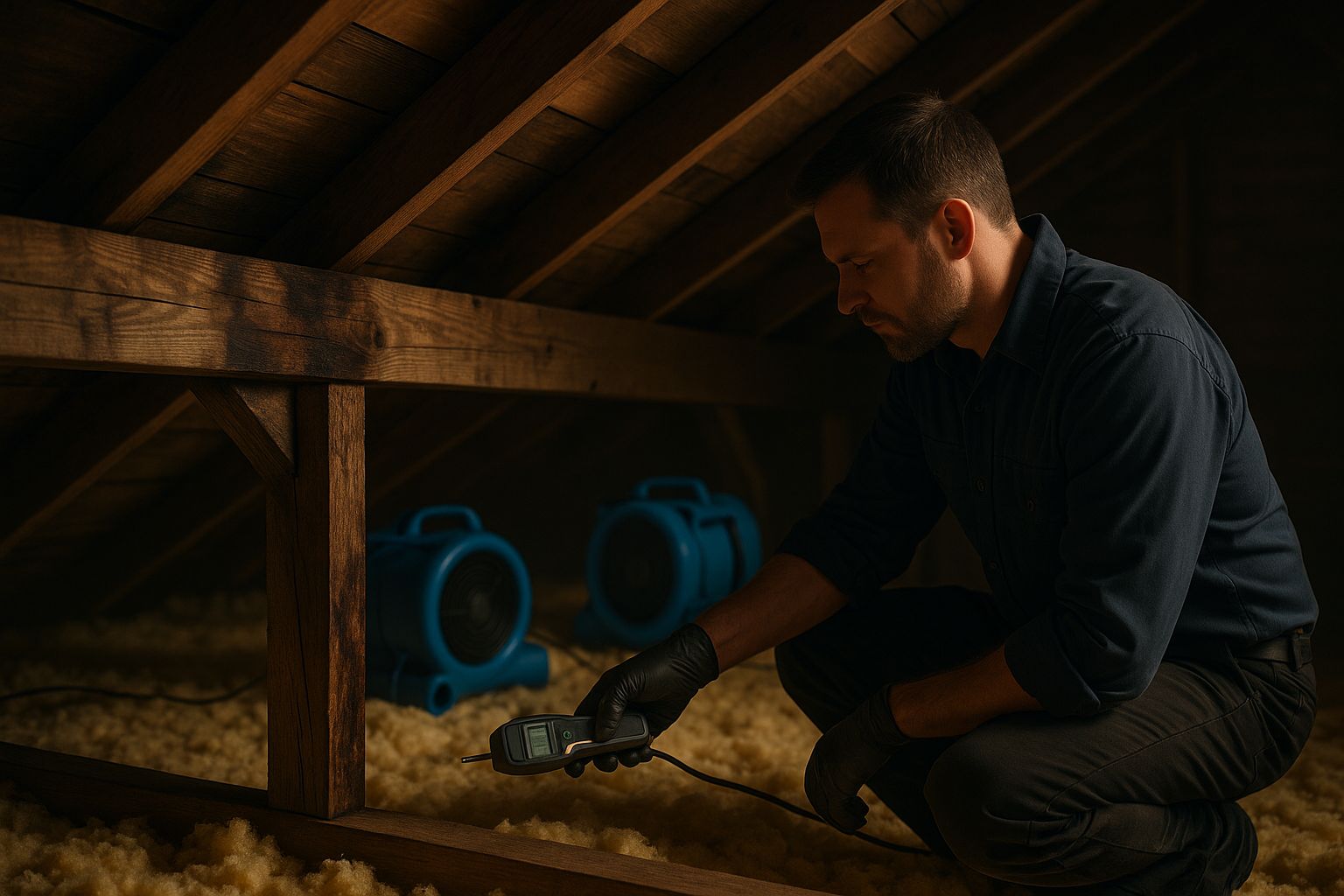
After a roof leak, drying should begin as soon as the water source is controlled. Opening windows is usually not enough in Memphis because outdoor humidity can be high. In many cases, professional drying equipment is needed.
Proper drying may include:
- Moisture meters
- Thermal imaging
- Air movers
- Dehumidifiers
- Air scrubbers
- Removal of wet insulation
- Controlled removal of damaged drywall
- Daily moisture checks
Fans alone may move air, but they do not remove enough moisture from the structure. Dehumidification is often what makes the difference.
5. Check the Attic, Not Just the Room Below
Many roof leak mold problems start in the attic. If the attic stays damp, mold can grow on roof decking, rafters, insulation, and stored boxes.
After a Memphis roof leak, inspect the attic for:
- Wet or matted insulation
- Dark staining on plywood or OSB decking
- Musty odors
- Rusted nail tips
- Condensation on ductwork
- Damp rafters
- Water trails along framing
- Wet cardboard boxes or stored items
Be careful walking in an attic. Step only on framing members or proper walk boards. If you are not comfortable inspecting it safely, call a professional.
6. Watch for Musty Smells
A musty smell after a roof leak is a warning sign. It usually means moisture is still trapped somewhere.
Check around:
- Ceiling stains
- Attic access doors
- Closets near the leak
- HVAC returns
- Light fixtures
- Exterior walls
- Baseboards below the affected area
Do not cover up the smell with candles, sprays, or air fresheners. The source needs to be found and dried.
7. Use Moisture Meters Before Closing Anything Up
A ceiling can look dry and still contain moisture. Paint, texture, and drywall paper can hide the problem.
Before repainting, replacing insulation, or patching drywall, the affected area should be checked with moisture meters. This helps confirm whether the structure has actually dried.
This is especially important if:
- The leak lasted more than one rain event
- Water entered during a storm
- Insulation got wet
- The ceiling sagged or bubbled
- There is a musty smell
- The leak affected a bedroom, nursery, or living area
- You are filing an insurance claim
Painting over a water stain before confirming it is dry can trap moisture and lead to mold behind the surface.
8. Improve Ventilation and Humidity Control
Memphis humidity can make a roof leak problem worse. Once the leak is fixed and the damaged area is dry, keeping indoor humidity under control helps prevent future mold.
Good mold prevention habits include:
- Running the air conditioner during humid weather
- Keeping indoor humidity below 50% when possible
- Using bathroom and kitchen exhaust fans
- Making sure attic ventilation is working
- Keeping gutters clean
- Checking roof penetrations after storms
- Using a dehumidifier in damp areas when needed
An inexpensive humidity meter can help you spot rooms that are staying too damp.
9. Do Not Ignore Small Roof Leaks
A slow roof leak can be worse than a one-time leak because it keeps materials damp over and over. That repeated moisture creates the perfect setup for mold.
Call for help when you notice:
- Ceiling stains that grow after rain
- Paint bubbling or peeling
- Soft drywall
- Sagging ceiling areas
- Wet insulation
- Water around light fixtures
- Dark spots in the attic
- Musty odors after storms
In Memphis neighborhoods like East Memphis, Midtown, Cordova, Bartlett, Germantown, Collierville, and Southaven, roof leaks are common after heavy storms. Quick action can save drywall, insulation, flooring, and personal belongings.
10. Know When to Call a Restoration Company
You may be able to handle a very small, clean leak if it is caught immediately and nothing inside the wall or attic stayed wet. But roof leaks often involve hidden moisture, which is where professional equipment helps.
Call a restoration company if:
- Water soaked the ceiling or insulation
- The leak affected more than a small area
- The attic smells musty
- You see dark staining or visible mold
- Water entered during a storm
- The ceiling is sagging
- Electrical fixtures got wet
- You need documentation for insurance
A professional can inspect the moisture path, remove unsalvageable materials, set drying equipment, and help prevent a mold issue from getting worse.
What to Do Right After a Roof Leak
Here is a simple action plan:
- Stop the leak or have the roof tarped.
- Move furniture and belongings away from the wet area.
- Place buckets or towels only as a temporary measure.
- Take photos before cleanup for insurance.
- Check the attic for wet insulation or wood.
- Call a roofer for the exterior repair.
- Call a restoration company to inspect and dry the interior.
- Do not repaint or patch drywall until moisture readings confirm it is dry.
The sooner the structure is dried, the lower the chance of mold.
RestoExperts Can Help After a Roof Leak in Memphis
A roof leak is not just a roofing problem. Once water gets inside, it becomes a water damage and mold prevention problem too.
RestoExperts helps Memphis-area homeowners with water damage cleanup, structural drying, mold remediation, storm damage, and insurance-related documentation. We serve Memphis, Bartlett, Germantown, Collierville, Cordova, Millington, Arlington, Lakeland, Southaven, and Olive Branch.
If you have a roof leak, ceiling stain, wet insulation, or musty smell after a storm, call (901) 519-2580 or visit restoexperts.com/contact.
Jason has led Resto Experts since 2018, responding to thousands of water, mold, fire, and storm damage calls across the Memphis metro. His IICRC certifications and direct documentation process are accepted by every carrier operating in the region.
Need Restoration Help Now?
IICRC-certified team on call. 60-minute response anywhere in the Memphis metro.
Call (901) 519-2580