
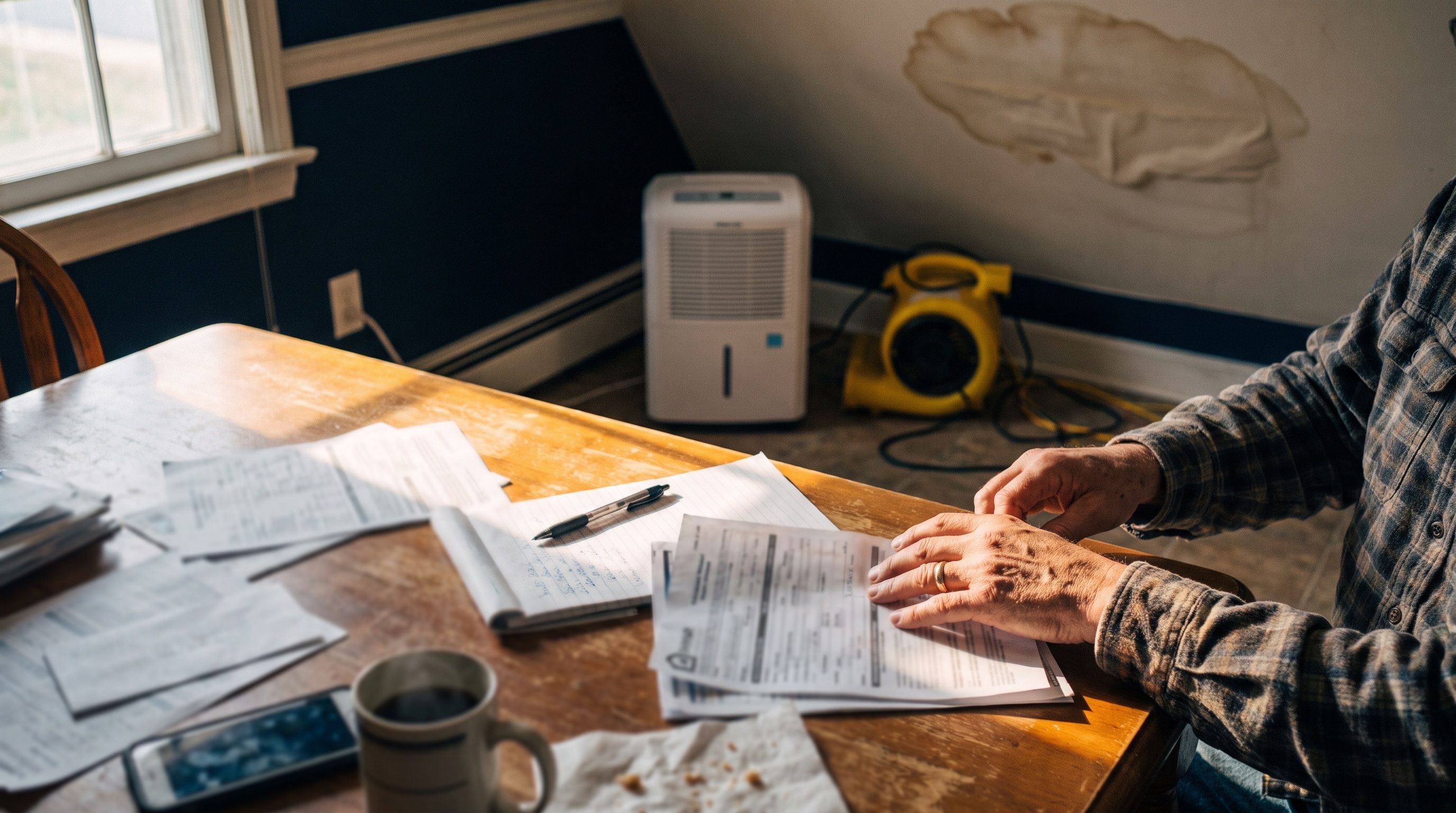
Water Damage Insurance Claim Mistakes That Cost Memphis Homeowners
- The most expensive water damage claim mistakes happen in the first 24 hours: waiting to report, cleaning up before documenting, and drying too fast.
- Insurers can decline to pay for building materials that were torn out unnecessarily, so over-demolition to speed up drying can come out of your own pocket.
- Photos, moisture readings, and a daily dry log are the evidence that keeps a claim from being disputed.
- Resto Experts documents every loss to the IICRC S500 standard and bills your carrier directly, with 60-minute response across the Memphis metro, 24/7.
Why Water Damage Claims Get Cut Short
A water damage claim is an evidence case. Your carrier pays based on what can be shown: where the water came from, what it touched, and what it took to put things right. Most claim disputes trace back to evidence that was never captured, or to work that got ahead of the paperwork.
The average U.S. water damage claim runs $12,514 (Insurance Information Institute, 2023). The gap between a claim that pays properly and one that gets shorted is rarely the damage itself. It is what the homeowner did in the first day or two. These are the mistakes we see cost Memphis homeowners the most.
What Mistakes Should I Avoid When Filing a Water Damage Claim?
1. Waiting to Report the Loss
Policies require prompt notice. Every hour water sits, it also grows the damage: in Memphis humidity, mold can begin colonizing within 24 to 48 hours. Report the same day, even if you do not know the full extent yet.
2. Cleaning Up Before Documenting
The instinct to grab towels first is exactly backwards for the claim. Photograph and video the source, the standing water, and every affected room before anything is moved. Documenting water damage properly is the foundation the entire claim rests on.
3. Missing Hidden Moisture
Water travels into wall cavities, under flooring, and behind cabinets. Damage that gets discovered weeks later, after the claim is closed, is easy for a carrier to dispute as unrelated or pre-existing. Moisture meter readings across every affected surface put the hidden damage on the record from day one.
4. Drying Too Fast Instead of Drying Properly
Surface-dry is not dry. Rushing leaves moisture trapped inside walls and floors, which becomes mold and structural trouble later. The IICRC S500 Standard for Professional Water Damage Restoration, the industry standard governing structured drying, defines target moisture levels by material and how to verify them. Proper water damage restoration dries to those targets, not to a schedule.
5. Skipping the Dry Log
Daily moisture readings, equipment placement notes, and dated photos form the dry log your carrier’s adjuster expects to see. No log means the carrier is taking your word for what the equipment did. A log turns the conversation from opinion into data.
6. Not Fixing the Water Source
If the failed supply line or roof opening is not repaired, the loss recurs, and a second claim for the same water source draws scrutiny. Fix the source as part of the mitigation, and document the repair.
7. Throwing Away Damaged Materials Too Soon
The adjuster needs to see what was damaged, and contaminated materials need documented disposal. Keep damaged items until the claim is documented, and keep samples of flooring and drywall where replacement quantities might be questioned.
The Mistake Most Memphis Homeowners Never See Coming: Over-Demolition
Here is the one that surprises people. Tearing out more flooring or drywall than the loss requires, whether to speed up drying or out of caution, can backfire: your insurance provider may not cover removal of building materials that the moisture readings did not justify. Unwarranted demolition can land on your side of the ledger.
This is why the readings matter so much. Under IICRC S500 protocols, what gets removed and what gets dried in place is decided by measured moisture content and contamination category, not by eyeball. A documented reading that justifies every cut sheet of drywall is the difference between the carrier paying for the tear-out and you paying for it. It is also one more reason to call a restoration company before your insurance company: the loss gets scoped and recorded correctly before anyone starts cutting.
How to Document Water Damage So Your Claim Holds Up
Build the file in this order: photos and video of everything before cleanup, the source of the loss, model and serial numbers of damaged appliances, a written inventory with approximate ages, moisture readings across affected surfaces, then the daily dry log until materials hit target. If you are about to start the process, our step-by-step guide to filing a water damage claim walks through each stage, and our post on whether insurance can deny your claim for choosing your own contractor covers your rights on who does the work.
Frequently Asked Questions About Water Damage Claims in Memphis
The answers above cover coverage, out-of-pocket costs, drying timelines, late reporting, and contractor choice. If your situation is live right now, skip the reading: call (901) 519-2580 and we will tell you what to photograph before we arrive.
How Resto Experts Handles Water Damage Claims in Memphis
Resto Experts is an IICRC certified restoration company and licensed general contractor based in Millington, serving the entire Memphis metro. We document every loss to the IICRC S500 standard: photos, moisture mapping, contamination category, and a daily dry log, then bill your carrier directly so the evidence and the invoice tell the same story. Drying and rebuild stay under one roof.
Water down? Call (901) 519-2580. We respond within 60 minutes, 24/7.
Jason has led Resto Experts since 2018, responding to thousands of water, mold, fire, and storm damage calls across the Memphis metro. His IICRC certifications and direct documentation process are accepted by every carrier operating in the region.
Need Restoration Help Now?
IICRC-certified team on call. 60-minute response anywhere in the Memphis metro.
Call (901) 519-2580